
landnpop
Perfume sells in thirty seconds. Flying it is the hard part.
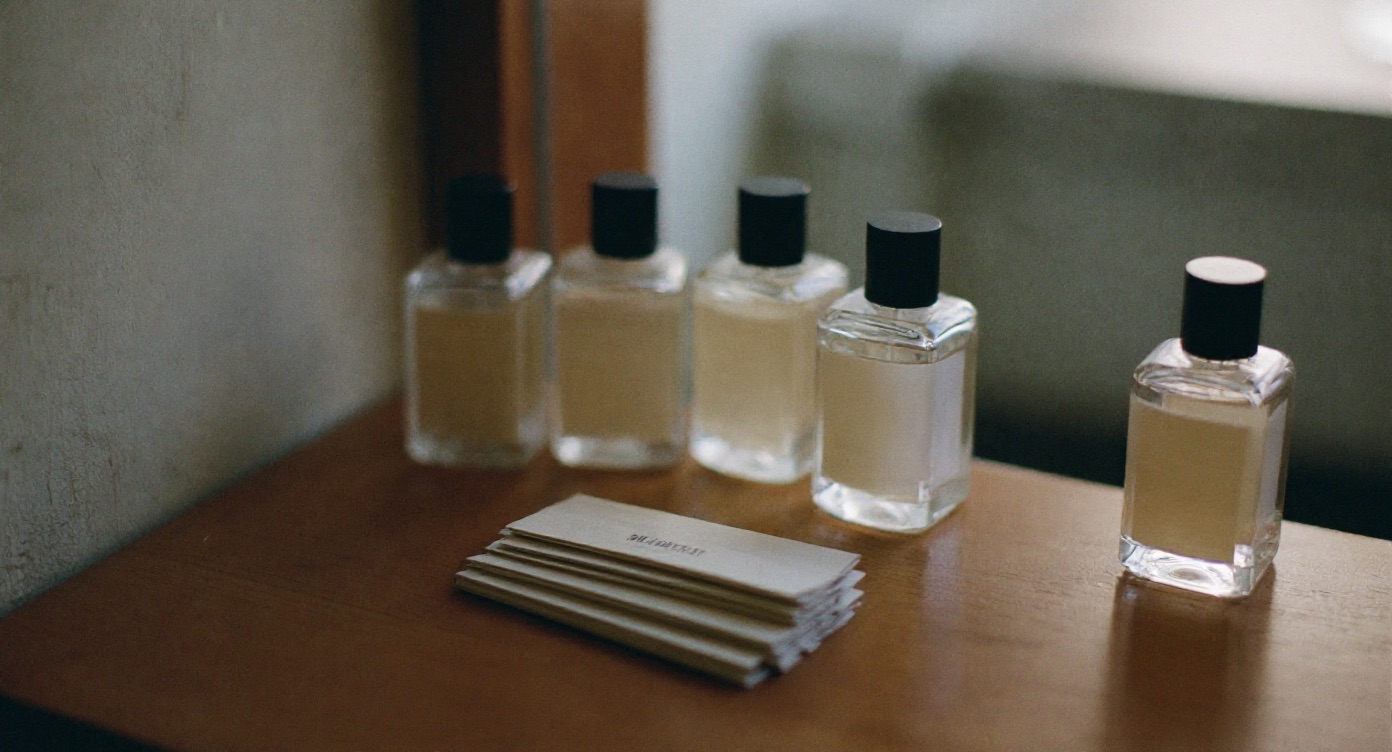
Rizky Arief Dwi Prakoso left a Bandung shoe brand in late 2018 and started HMNS. It is now one of the most visible fragrance names in Indonesia, with an offline presence in Malaysia and a live Singapore handle.
That is a real regional move, and it is worth being precise about what it is. The Paris Fashion Week appearance that gets quoted around it was a giveaway campaign, and another Indonesian house's Milan showing was a pop-up. Indonesian fragrance is dominant at home and emerging regionally. It is not yet a proven exporter, and no Southeast Asian fragrance brand has broken out in Singapore the way Indonesian skincare has.
So this is not a story about a category that has already won. It is about one that is unusually easy to sell and unusually awkward to ship — and about the single decision that changes the second half.
Why it sells
Perfume carries its story on the bottle. A shopper in Singapore picks up an Indonesian fragrance, reads two lines about the notes, and understands what she is buying.
That shows up at a market table, where fragrance sells on a testing strip in about thirty seconds.
It also survives being a gift. A large share of fragrance sales at pop-ups go to people buying for someone else, which suits a market crowd and suits an airport.
Then there is the material. Indonesian perfumers work with agarwood and patchouli, and Indonesia supplies a meaningful share of the world's patchouli. A Singaporean shopper cannot buy that provenance from a local brand. It is the clearest case of a product being Indonesian in a way that adds value rather than needing explanation.
The home market pushes you out
The local fragrance scene has crowded fast and no brand dominates it. The best-known local labels hold single-digit shares, and published estimates disagree with each other — treat any precise market-share figure you are quoted with suspicion, including ours.
That fragmentation pushes brands outward earlier than a comfortable home market would.
The freight rule that catches everyone
Alcohol-based perfume classifies as dangerous goods for transport. UN1266, Class 3, flammable liquid.
For air freight that means declared dangerous-goods handling or limited-quantity provisions, surcharges, and a forwarder certified to carry it. Standard e-commerce courier lanes refuse it. Brands find this out at the point of booking, about a week before an event.
This is the one place fragrance is genuinely harder than skincare. A serum flies on an ordinary lane. Your eau de parfum does not.
The part most founders miss
Alcohol-free attar and oil-based perfume falls outside UN1266 entirely.
That is the whole difference. Same category, same shelf, same customer — and one of them ships on a normal lane while the other needs a certified forwarder and a surcharge.
If any part of your range is oil-based, that is the part to bring to a first Singapore market. It is also worth knowing before you decide what to reformulate, rather than after.
For alcohol-based stock there are two usual workarounds. Ship by sea, which costs less and adds a few days on a Jakarta to Singapore lane. Or ship small quantities under limited-quantity rules, which suits a pop-up better than a restock.
Say the word fragrance in your first message to a forwarder, and ask whether they handle dangerous goods before you discuss rates. Classification depends on the specific product and pack size, so do not assume your whole range moves the same way.
Venues add a second layer. Some markets restrict alcohol-based products or cap how much you may keep on the stand. Read the vendor pack rather than finding out at load-in.
What Singapore asks of a perfume
The same thing it asks of any cosmetic. Perfume counts as a cosmetic product under HSA rules, so it needs a Responsible Person based in Singapore and an HSA notification before sale. The fee is S$13 for most fragrance products.
There is no extra regulatory gate here compared with skincare — it is the same ASEAN cosmetic regime, applied the same way.
Labels need attention. Alongside the standard particulars, high-alcohol perfume carries a flammability warning and aerosols carry pressurised-container warnings. Get the artwork signed off by whoever acts as your Responsible Person before you print, since the warnings depend on your formulation.
One conversation does run shorter than it does for skincare: there is no whitening or brightening claim to evidence, so nobody asks for lab results before agreeing to act as your Responsible Person.
The read for founders
Perfume is the easy sell and the hard ship.
The selling advantages are real — thirty seconds on a strip, Indonesian materials a local brand cannot claim, and a compliance path that adds no gate you would not already face.
The shipping is the constraint, and it is decided by your formulation more than by your forwarder. Work out which of your products are alcohol-free before you plan the first trip.
Talk to us about selling here Free, and freight is one of the things we work out with you.
Sources: Kontan, Tempo, Detik Finance, HSA cosmetic products. Dangerous-goods classification is UN1266, Class 3 — confirm your own products and pack sizes with a certified forwarder. Local market-share estimates vary by source. Brands named are scene coverage, not landnpop clients.
Keep reading
- Indonesian brands are already selling at Singapore markets. Here's the evidence.Me-You Market at Suntec ran about a hundred vendors across a weekend. Indonesian brands were among them, and which categories turned up says something useful.
- Buttonscarves opened a store at Changi Airport. It took nine years.The clearest Indonesian success story in Singapore right now, and the timeline nobody puts in the press release.
- Singapore doesn't require a label on your clothes. Your buyer does.No fibre content, no care symbols, no country of origin. The law asks for nothing — which makes the label a commercial decision, and the swing tag the cheapest one you will underrate.
Thinking about Singapore for your brand?
Start with a Market Entry Brief: a free conversation about what to bring, where to sell it first, and what it costs.