
landnpop
The Muslim-lifestyle circuit runs all year, not just at Raya
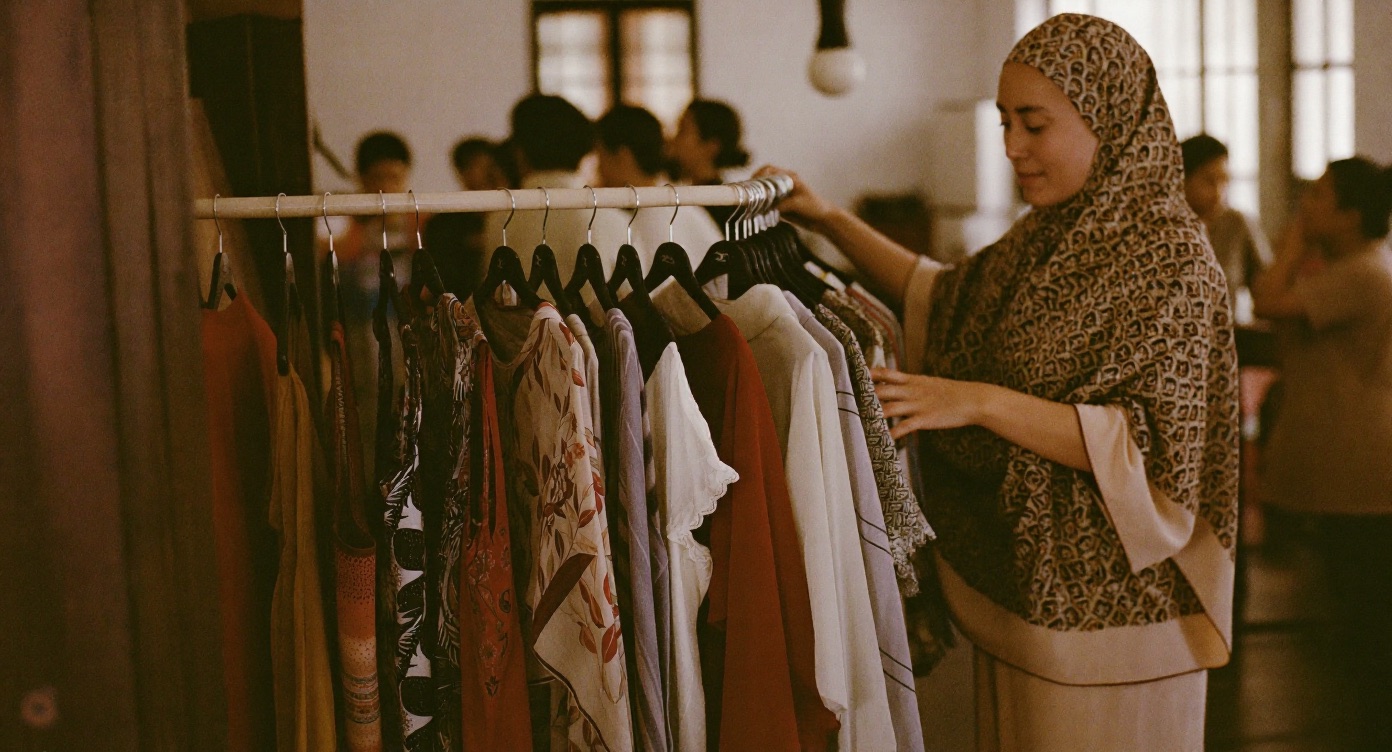
Ask an Indonesian founder when to sell modest fashion in Singapore and you get one answer. Raya. Book a bazaar, catch the season, go home.
The season is real. It is also the most crowded, most expensive and most competitive window in the year — and it is not the only one.
We mapped the organisers running Muslim-lifestyle events in Singapore and read what they publish. The Raya bazaars do cluster in February and March. The rest of the circuit does not.
What sits outside the season
A festival at Wisma Geylang Serai in June, thirty vendors drawn from Singapore, Malaysia and Thailand, advertised from around two thousand dollars for three days.
A faith-and-lifestyle festival at the Expo in July.
Another at the Expo in the week after Christmas, with registration already open and self-serve.
A dedicated Muslim fashion festival that runs twice a year, with booths starting around S$864.
And the largest of them, the Singapore Muslim Festival, drawing around seventy thousand people.
Four of those fall outside February and March. A brand that only thinks in Raya is queueing for one window a year alongside everybody else who thinks the same way.
The one that publishes its rules
Most organisers in this scene disclose very little before you apply. One is the exception, and it is worth planning around.
The Singapore Muslim Festival publishes a full rulebook and a price list. Its stall categories literally name Women's Fashion, Tudung and Perfumes — unusually direct evidence that an Indonesian modest brand is an intended exhibitor rather than a hopeful edge case.
Its rates are public too: roughly S$1,200 for a shared booth, roughly S$2,500 for a three-by-three metre retail booth.
Its expression-of-interest window runs 17–30 November, with notification in mid-December. That is the nearest hard deadline anywhere in this circuit, and it is the one worth putting in a calendar today.
Why this category carries an advantage
Indonesia is the world's number one modest fashion producer. That is not a positioning argument, it is a supply fact — and it is the band where an Indonesian brand arrives with a structural advantage rather than a story it has to tell.
It also cuts across price. These are mid-market family crowds, not luxury floors. A higher-priced brand can absolutely work here, but it earns the price on craft and provenance rather than on gloss.
The honest catch: density is not access
This is where the scene turns frustrating, and it is better to know before you build a plan on it.
Several of these organisers are reachable only by WhatsApp or Instagram direct message. One of the best-fitting events in Singapore — a dedicated Muslim fashion festival — publishes no website, no email and no phone number we could verify. The route in is a DM.
Others run self-serve vendor portals with free signup, where the rates only appear once you are inside.
So the circuit is dense, and it is genuinely open to foreign brands, but it is not tidy. Deadlines are published inconsistently. The best slots fill early. And a fair number of the phone numbers floating around aggregator sites do not belong to the organiser at all.
Plan the year, not the season. The June and December events are the ones nobody is fighting you for.
See what is on, and when applications open
Sources: organiser rulebooks, published rate cards and vendor calls, read August 2026. Rates and dates move — confirm with the organiser before you budget.
Keep reading
- Singapore doesn't require a label on your clothes. Your buyer does.No fibre content, no care symbols, no country of origin. The law asks for nothing — which makes the label a commercial decision, and the swing tag the cheapest one you will underrate.
- Cowhide crosses freely. Python needs paperwork.Singapore charges no import duty on leather goods, and ordinary cowhide has no permit at all. Exotic skins are a different regime — and the expensive part is on the way out, not the way in.
- Five Singapore markets say foreign brands may apply. The rest never say.We read every organiser we could find. Exactly five state it in writing. The rule that stops most founders applying turns out to be copy-paste boilerplate.
Thinking about Singapore for your brand?
Start with a Market Entry Brief: a free conversation about what to bring, where to sell it first, and what it costs.